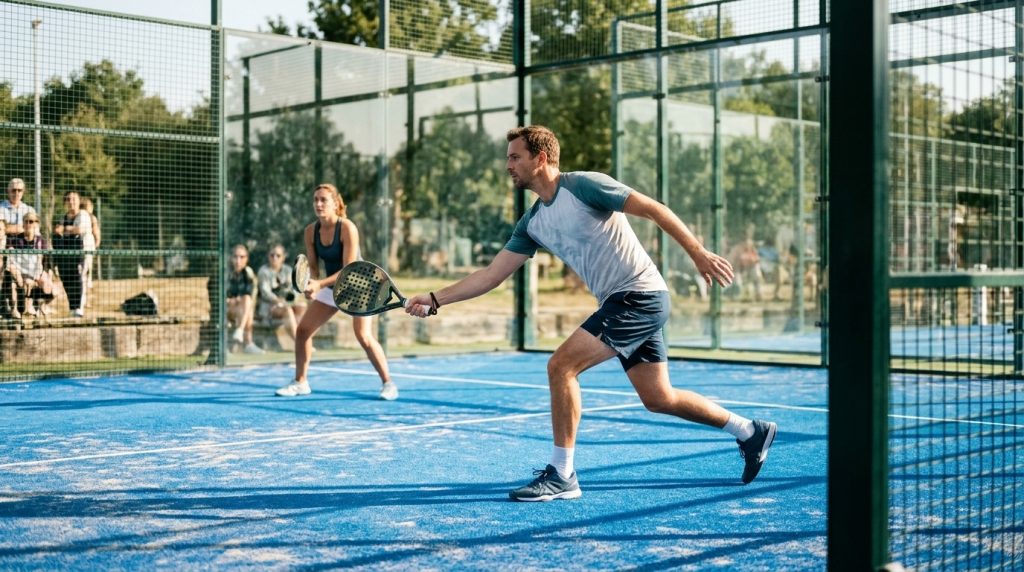
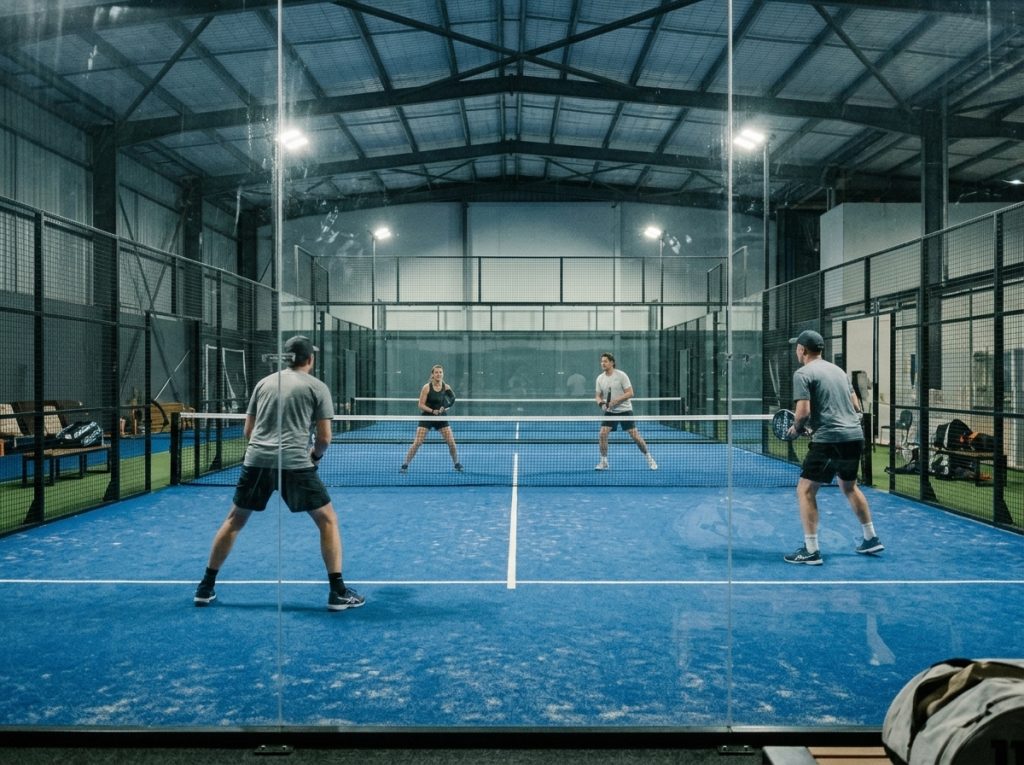
If you have walked past a tennis centre in Sydney, Melbourne, or the Gold Coast over the past eighteen months, you have likely heard the distinctive, solid thud of carbon fibre bats meeting depressurised tennis balls. In enclosed glass cages roughly a third the size of a standard tennis court, four players scramble across blue synthetic turf, chasing balls ricocheting off back glass walls like human pinballs.
This is padel (frequently called padel tennis). While American pickleball has absorbed substantial media oxygen, padel is the undisputed sporting behemoth of the Spanish-speaking world. In Spain, padel boasts over four million regular players, having comfortably overtaken tennis as the nation’s second most popular participation sport behind football. Now, after decades of European dominance, the sport has landed in Australia with serious commercial momentum.
Padel vs Pickleball: What Australians Need to Know
To the uninitiated Australian sports fan, padel and pickleball are easily lumped into the generic category of “modern racket trends”. Mechanically and culturally, they are completely different beasts:
- The Court: Pickleball is played on an open badminton-sized hard court with a low net. Padel is played inside a fully enclosed 10m x 20m arena constructed of 10mm toughened glass and steel mesh. The walls are active elements of play—if the ball bounces once on the turf and hits the glass, it remains live, mirroring the angles of squash.
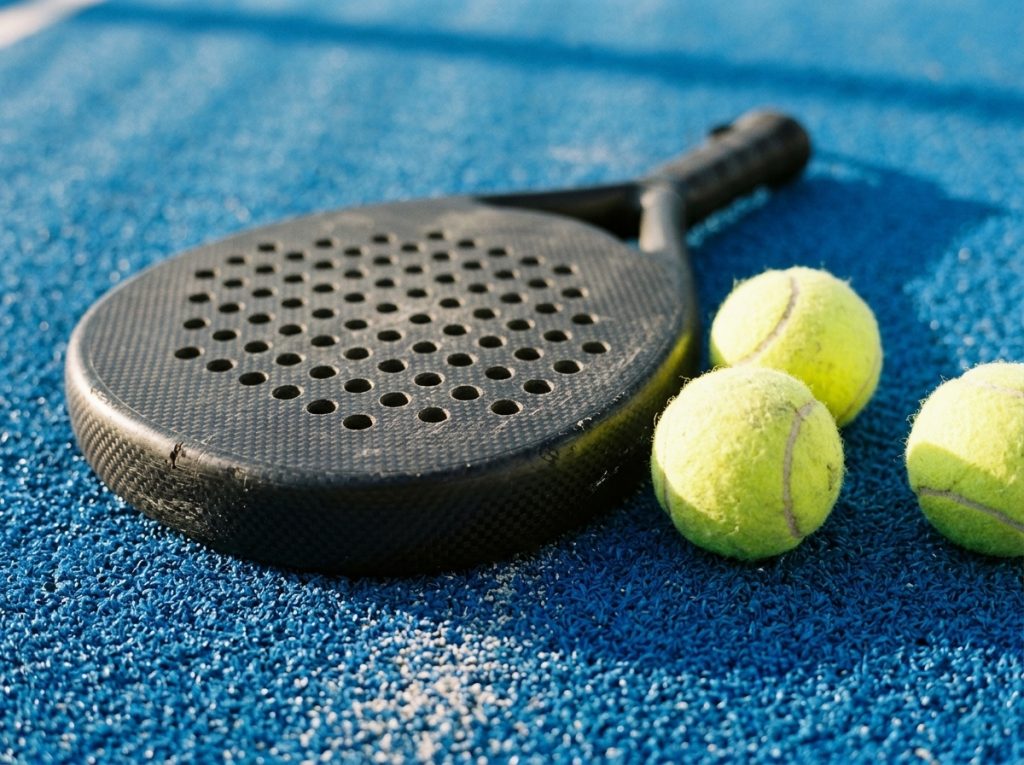
- The Equipment: Pickleball uses hollow, perforated plastic wiffle balls and flat wooden or composite paddles. Padel uses puncture-cored, solid composite bats (without strings) featuring perforated drill holes, and rubber felt balls identical in size to tennis balls, albeit with slightly reduced internal pressure.
- The Gameplay: Padel is played exclusively as doubles. It is faster, more three-dimensional, and far more physically dynamic than pickleball, relying heavily on lobs, spin control, and tactical court positioning rather than brute baseline power.
The Basics: How the Game is Played
Part of padel’s ferocious global adoption is its forgiving learning curve. While tennis demands years of technical coaching before an adult can maintain a sustained rally, a novice can pick up a padel bat and engage in frantic, highly entertaining 20-shot rallies within fifteen minutes.
- Underarm Serve: Serves are strictly executed underarm at or below waist height, bounced once behind the service line, and hit crosscourt into the opponent’s service box.
- The Glass is Your Friend: The ball must hit the turf first before striking any wall. Once it bounces on your side, you can let it rebound off the back or side glass before returning it, buying crucial split-seconds to reset your footwork.
- Scoring: Scoring mirrors traditional tennis (15, 30, 40, Game, with sets played to six games and tiebreaks at 6-all).
- Tactical Restraint: Smashing the ball as hard as possible usually hands the point to your opponents; an overhit smash simply rebounds high off the back glass, giving them an uncontested put-away at the net.
Starter Gear: What You Need on Court
Most commercial Australian facilities provide racket hire, but if you intend to play regularly, investing in a dedicated starter setup prevents forearm strain and accelerates your control. Unlike tennis racquets, padel bats differ by shape:
- Round Shape (Control): Best for beginners. Offers a generous sweet spot centered near the handle, maximising defensive touch and error tolerance.
- Teardrop Shape (All-Round): Balances power and control for intermediate players transitioning from tennis or squash. A quality teardrop carbon padel racket provides the ideal middle ground for court agility.
- Diamond Shape (Power): Top-heavy balance suited exclusively to advanced attackers with refined overhead mechanics.
- Dedicated Balls: Standard tennis balls carry too much internal pressure for enclosed glass courts, causing unpredictable bounces. Always use official pressurised padel balls to protect your racket core and maintain consistent bounce height.
Where to Play Padel Across Australia
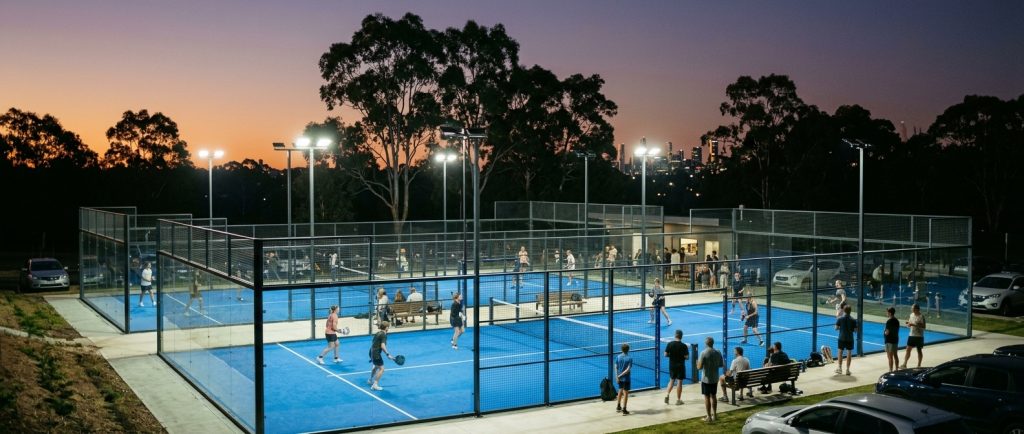
From converted squash courts to bespoke multi-court facilities, dedicated padel hubs are expanding rapidly across Australian metropolitan centres:
- Melbourne: One Padel (Docklands), Padel In (Moorabbin), and regional court retrofits across the inner east and bayside suburbs.
- Sydney: Sydney Padel (North Ryde, Moore Park), and dedicated indoor glass facilities emerging across western Sydney.
- Queensland: Gold Coast Padel (Miami) and emerging hubs across Brisbane’s northern corridor.
- Adelaide & Perth: Fast-growing club installations integrating into established lawn tennis and squash complexes.
Much like staying up to watch late-night Spanish football broadcasts, embracing padel is a direct gateway into modern Spanish sporting culture. To find local clubs, equipment providores, and court bookings in your state, browse the sports listings in our Australian Hispanic & Latin American Directory.