Most Australian adults who resolve to learn Spanish start with high enthusiasm and a smartphone app. Six months and an unbroken streak later, they know the Spanish word for “penguin” and how to declare that “the bear drinks milk”, yet freeze completely when attempting to order a coffee in Madrid or decipher an automated train announcement in Santiago.
Gamified language apps excel at building daily habits, but they treat language acquisition like an isolated puzzle rather than a dynamic reflex. If the objective is genuine conversational ability—navigating Latin America independently, conversing with native-speaking colleagues, or comfortably engaging at local community tables—a fundamental pivot in method is required. Functional Spanish for Australian adults requires practical systems built around realistic working hours, geographic realities, and high-frequency communication.
The Trap of Low-Yield Vocabulary
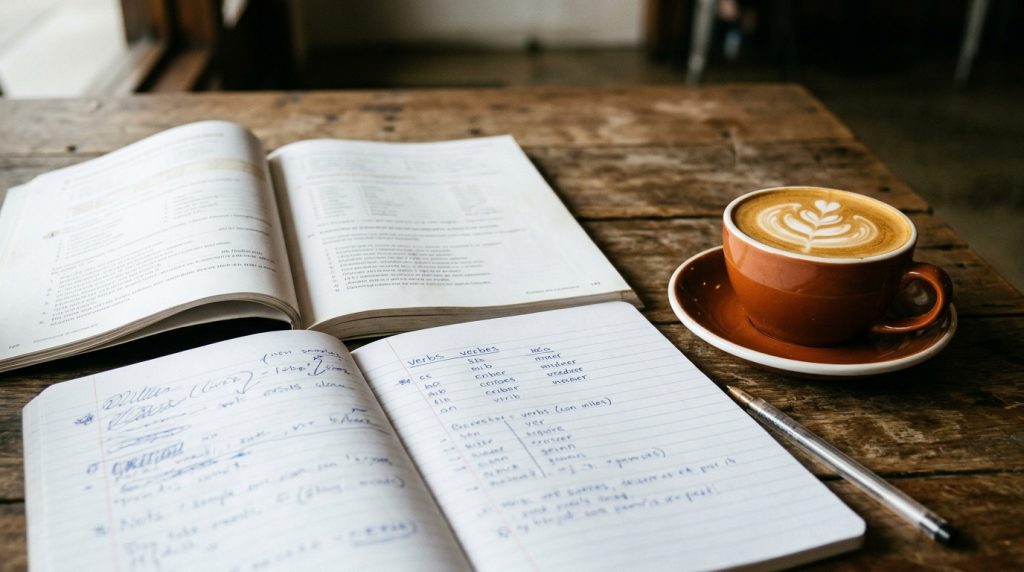
Conversational fluency does not require memorising 5,000 discrete words. In everyday spoken Spanish, the top 500 words and approximately 20 core grammatical patterns account for nearly 70% of spoken interaction. The primary error made by adult learners is spending hours cataloguing fringe nouns—names of zoo animals, obscure kitchen utensils, or specific garments—while neglecting the fundamental high-frequency verbs that drive human communication.
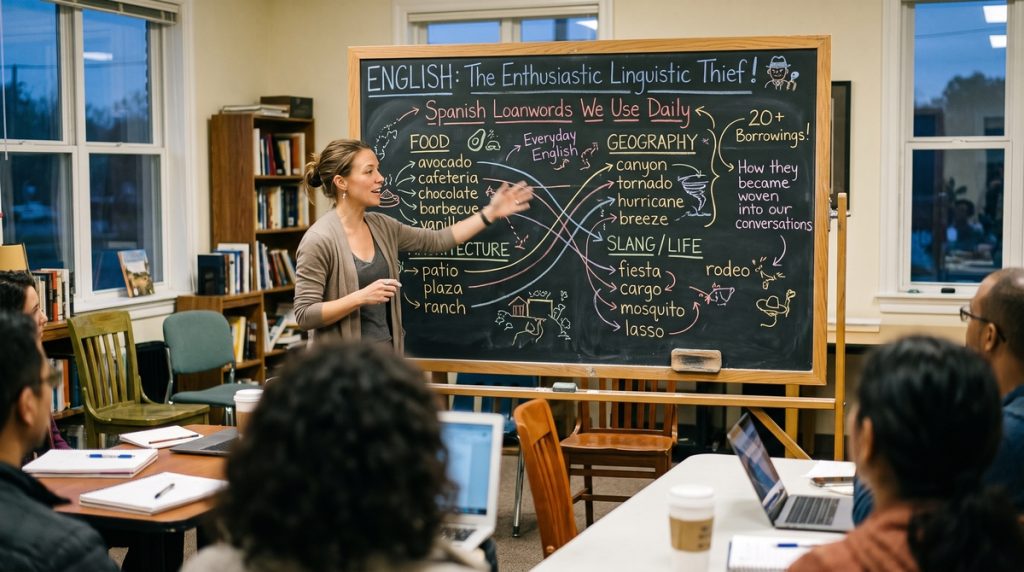
Mastering the present and simple past forms of staple irregular verbs—such as tener (to have), querer (to want), ir (to go), poder (to be able to), and hacer (to make/do)—unlocks exponentially more conversational utility than any vocabulary flashcard deck. Furthermore, native English speakers already possess an unrecognised vocabulary reserve. As highlighted in our review of common Spanish loanwords and cognates used in English, hundreds of words sharing Latin roots require almost no memorisation to understand and deploy immediately.

Navigating the Australian Time-Zone Conundrum
Nothing replaces spontaneous, 1-on-1 dialogue with a native speaker. However, Australian learners face an immediate geographic friction: Spain sits between 8 and 10 hours behind Australian Eastern Standard Time (AEST). Booking an evening session with an instructor in Seville or Madrid generally means finding someone willing to teach at dawn their time.
The practical solution lies in the Americas. Morning schedules across Colombia, Peru, Ecuador, and Mexico correspond cleanly with Australian evenings between 6:00 pm and 9:00 pm AEDT. Beyond the logistical alignment, Latin American instructors offer an exceptionally clear, cadence-friendly learning foundation for beginners, with neutral pronunciation and consistent pronoun usage.
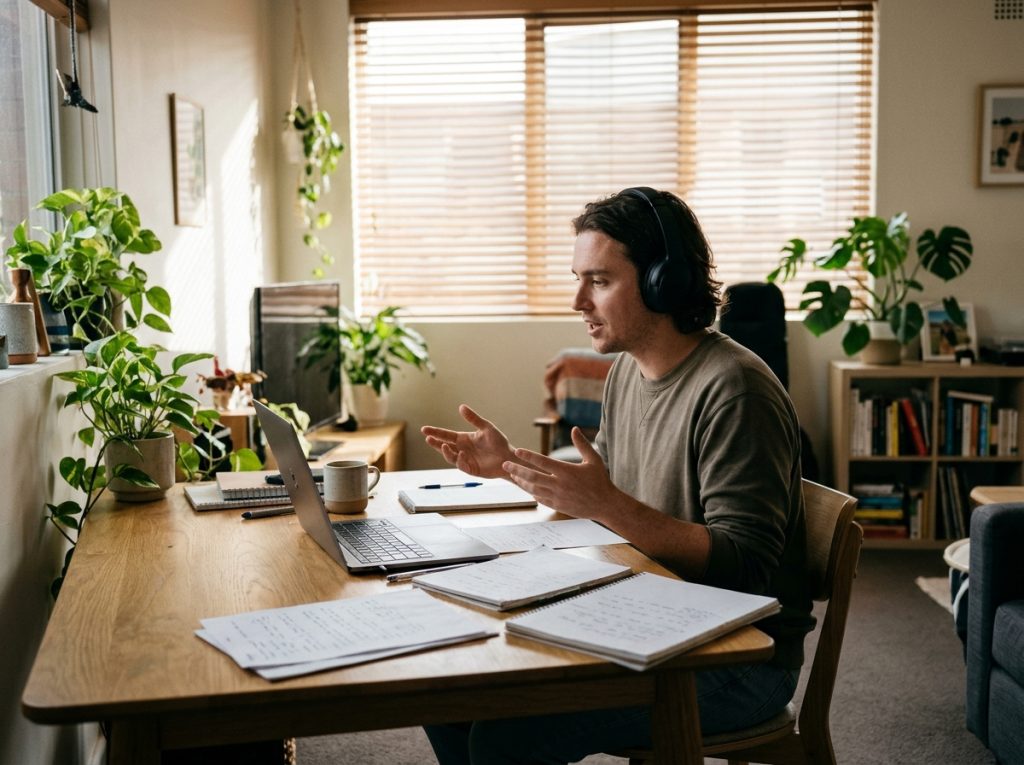
For independent learners needing a structured bridge between passive app-tapping and live speech, Babbel offers comprehensive dialogue-led modules that clearly explain syntax and grammatical mechanics. For active conversational practice, connecting with native private tutors through italki allows learners to schedule flexible, targeted speaking sessions starting from $15 to $25 AUD per hour.
Local Classrooms and Community Anchors
While digital tools deliver personal flexibility, physical community classrooms provide external accountability and structured progression. Across Australian capital cities and regional centres, several reliable avenues exist for adult learners:
- Instituto Cervantes: Operating primarily from Sydney, this official institution of the Spanish Ministry of Foreign Affairs sets the international benchmark for structured curriculum and DELE accreditation.
- Adult Education Centres: Providers such as the Centre for Adult Education (CAE) in Melbourne and the Workers’ Educational Association (WEA) in Sydney and Adelaide run accessible, evening-based short courses specifically tailored for travel and leisure.
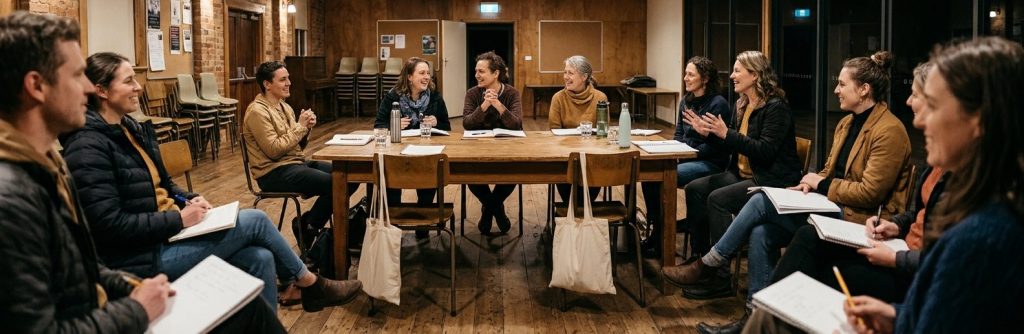
- Intercambio Meetups: Casual weekly language exchange tables hosted in suburban pubs and cafes offer low-pressure environments to practice spontaneous responses over food and drink.
To locate accredited Spanish language centres, regional cultural bodies, and community conversation clubs across Australia, consult the verified listings in our Australian Hispanic & Latin American Directory.
The Realistic 20-Minute Daily Protocol
Adult language acquisition relies on sustained frequency rather than occasional marathon study sessions. Attempting a four-hour grammar session on a Sunday afternoon produces negligible retention compared to consistent daily micro-exposures. A manageable daily protocol built around ordinary workday routines includes:
- Morning Transit (10 minutes): Immerse in natural cadence by listening to intermediate Spanish audio designed for learners, such as Hoy Hablamos (Apple, Spotify) or Unlimited Spanish, without stopping to translate every unknown word.
- Midday Check (5 minutes): Read a single short cultural headline, recipe, or short excerpt entirely in Spanish, noting one useful phrasing structure.
- Evening Review (5 minutes): Practise whole phrases rather than isolated single words to build functional muscle memory for syntax and verb agreements.
- Weekly Checkpoint (45 minutes): Run a dedicated 1-on-1 speaking session with an online tutor to stress-test the vocabulary encountered throughout the week.
Perfection is the enemy of functional language ability. Grammatical precision naturally refines over time; opening the mouth and delivering an imperfect sentence is the only mechanism that builds genuine conversational fluency.