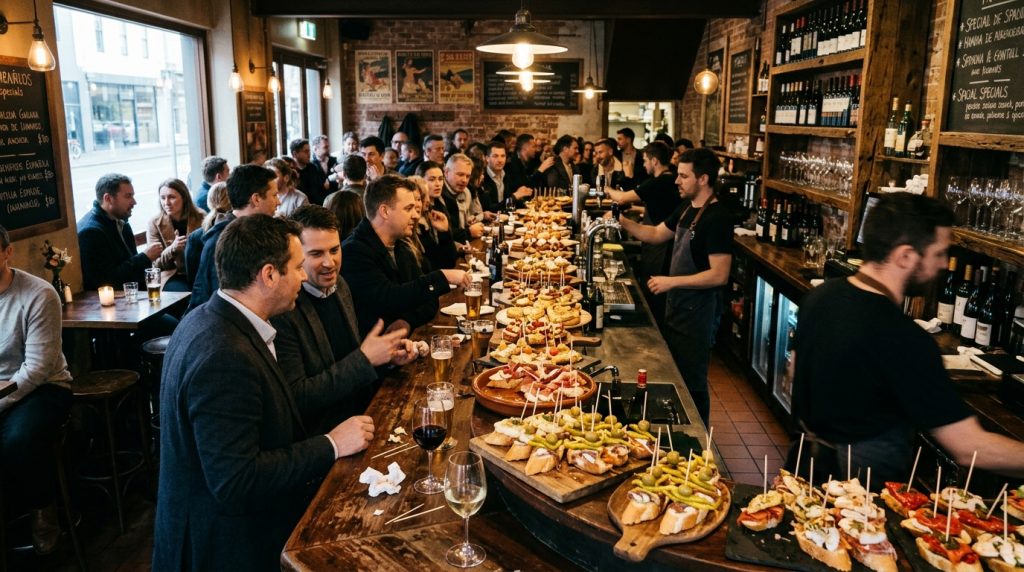
Walk into almost any inner-city Australian wine bar with exposed brick and dim lighting, and you will inevitably find a “Tapas” section on the menu. More often than not, it is simply a collection of standard entrees served on smaller plates at full-course prices: a bowl of warmed mixed olives for $14 AUD, three arancini balls, or sliced chorizo swimming in excessive oil.
In Spain, tapas and pintxos are not vague culinary catch-alls for small portions. They are two distinct, fiercely regional dining cultures separated by geography, social etiquette, and centuries of tradition. Understanding the boundary between an Andalusian tapa and a Basque pintxo is the quickest way to separate an authentic Spanish dining experience in Australia from an overpriced marketing exercise.
The Southern Tradition: What Real Tapas Actually Mean
The origin of the word tapa stems from the Spanish verb tapar (to cover). Historically, bartenders in southern regions like Andalusia placed a small saucer, piece of bread, or slice of cured ham over a glass of dry sherry or beer to keep out dust and fruit flies. Over time, that informal edible lid evolved into a complimentary bite served alongside every ordered beverage.
In cities like Granada, Jaén, and parts of Madrid, this ritual remains intact: you order a small draught beer (a caña) or a glass of local wine, and a small plate arrives free of charge. It might be a saucer of marinated olives, a wedge of warm tortilla, or slow-braised pork cheek in a clay dish. Tapas are communal, conversational, and designed to accompany the drink—not replace a seated three-course dinner.
When preparing tapas at home, the vehicle matters as much as the ingredient. Traditional Spanish cooking relies heavily on traditional glazed terracotta cazuelas. These heat-retentive clay dishes go directly from stovetop to table, keeping dishes like gambas al ajillo (garlic prawns) bubbling right in front of your guests.
The Northern Craft: The Architecture of Basque Pintxos
Travel north to the Basque Country (Euskadi)—anchored by San Sebastián and Bilbao—and tapas largely cease to exist. Here, the undisputed king of the counter is the pintxo (spelled pincho in Castilian Spanish).
The word pintxo comes from pinchar (to pierce or spike). Unlike loose tapas shared across a group, a pintxo is an individually constructed, highly engineered bite mounted on a slice of crusty baguette and pinned firmly together with a wooden toothpick or small skewer. You do not share a pintxo; you eat it yourself in two or three purposeful bites while standing at the bar.
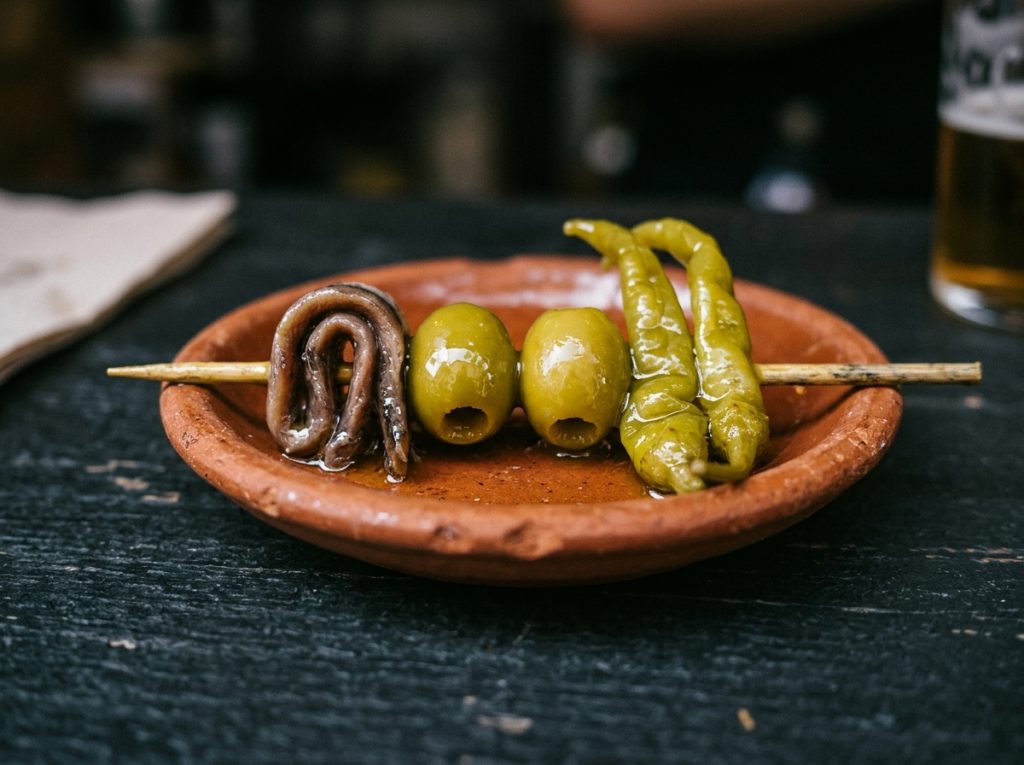
The benchmark of all Basque pintxos is the legendary Gilda: an umami-rich skewer combining an olive, a pickled green guindilla pepper, and a salted Cantabrian anchovy fillet. Created in the 1940s at Bar Casa Vallés in San Sebastián, it was named after Rita Hayworth’s iconic film character—described as green, salty, and a little spicy.
Building authentic pintxos at home requires sturdy bamboo paddle skewers that will not splinter when pinning through dense sourdough crusts and layered conservas.
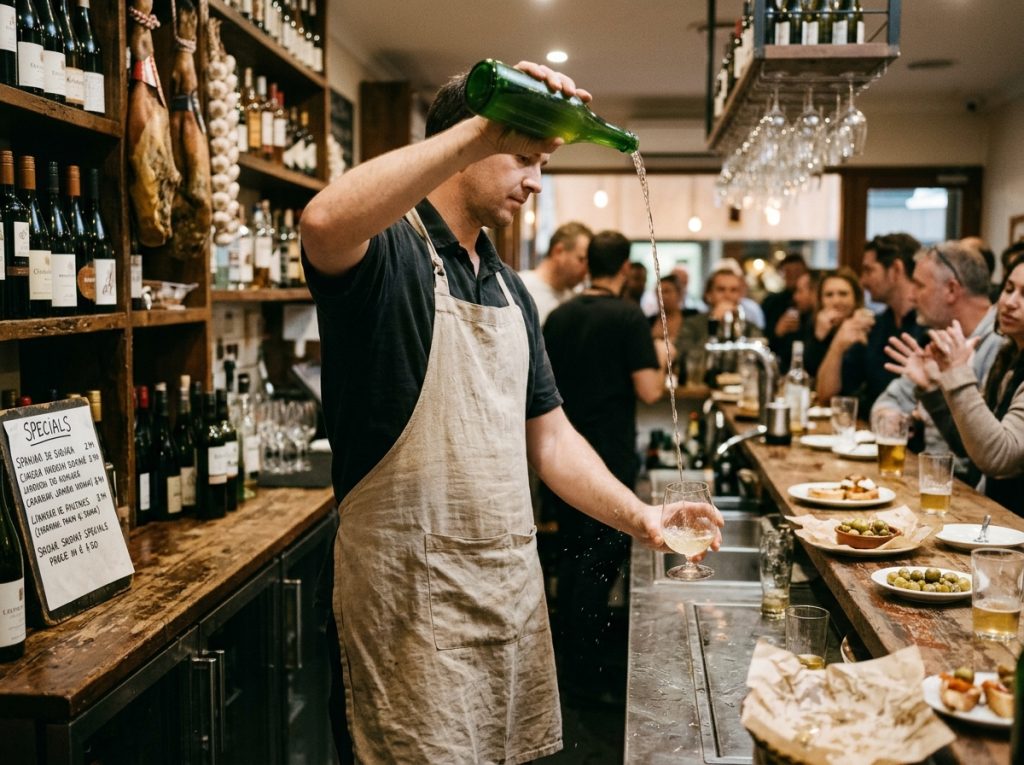
Counter Culture: The Unwritten Etiquette
The biggest disconnect for Australians visiting Spain—or trying to recreate the experience locally—is how the food is consumed. Sitting down at a formal table for two hours to eat six small dishes completely misses the spirit of both traditions.
- The Txikiteo (Pintxo Crawl): In the Basque Country, locals practice txikiteo. You walk into a crowded bar, order a small glass of crisp txakoli wine or a zurito (a half-pour of beer), select one or two signature pintxos from the counter, eat standing up, and immediately move on to the next bar. Each establishment has one or two house specialities they do better than anyone else.
- The Toothpick Honor System: In traditional pintxo bars, you keep your discarded wooden skewers on your plate. When you are ready to leave, the bartender simply counts the skewers to calculate your bill.
- Drinks Lead, Food Follows: Tapas and pintxos are social catalysts designed around conversation and drinking. You never order a mountain of food upfront; you order drink by drink, letting the evening dictate the pace.
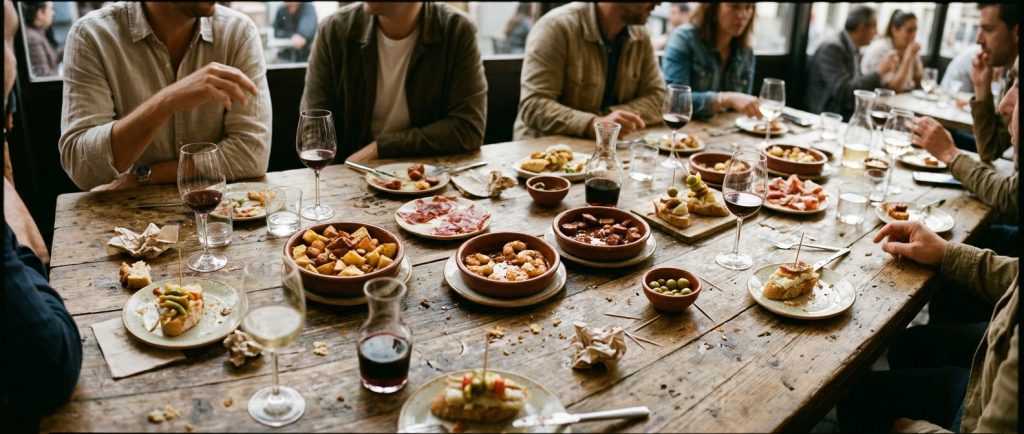
Where to Find Authentic Versions in Australia
While plenty of venues serve generic Mediterranean small plates, several dedicated Australian bars capture the true spirit and culinary precision of northern and southern Spain:
- Naked for Satan (Fitzroy, Melbourne): The ground floor pays direct homage to the bars of San Sebastián, featuring an extensive glass counter loaded with freshly skewered pintxos alongside local and imported craft beers.
- MoVida Next Door (Melbourne CBD): Right on Hosier Lane, this standing-room-friendly bar serves authentic Andalusian-style tapas, freshly sliced jamón ibérico, and premium canned conservas without fine-dining stiffness.
- Gildas (Surry Hills, Sydney): Named after the iconic Basque bite, Lennox Hastie’s wine bar pairs razor-sharp, authentic pintxos with an extensive list of regional Spanish sherries and vermouths.
For more verified continental grocers, imported conservas stockists, and authentic dining rooms across every capital city, consult the curated entries in our Australian Hispanic & Latin American Directory. If you are cooking at home, pair your spread with authentic staples from our guide to the essential Spanish pantry in Australia.
Mastering the Craft at Home: Recommended Reading
If you want to move beyond basic recipes and understand the regional techniques behind these dishes, two authoritative cookbooks belong on every Australian home cook’s shelf:
- Basque Country: A Culinary Journey Through a Confident Cookery by Marti Buckley: The definitive English-language guide to Basque gastronomy, written by an American chef and journalist who made San Sebastián her home. Her breakdowns of pintxo construction and seafood cookery are unmatched.
- The Food of Spain by Claudia Roden: A seminal, richly detailed exploration of regional Spanish culinary history that clearly traces how southern tapas evolved differently from northern mountain and coastal cooking.