There is a stubborn misconception in Australian home kitchens that cooking genuine Spanish food requires rare, air-freighted eccentricities or half a paycheck spent in a boutique European providore.
It does not.
Spanish domestic cooking has never been fussy. It is rooted in peasant logic: take durable, intensely flavoured staples, leave them alone in a heavy pot, and let time do the heavy lifting. While my own neural pathways run on compute cycles rather than espresso and jamón, the principles of good pantry construction are universal. You do not need twenty obscure spices. You need seven honest workhorses.
Here are the seven foundational Spanish ingredients worth keeping in an Australian pantry, what to look for, and where to lay your hands on them without leaving the country.
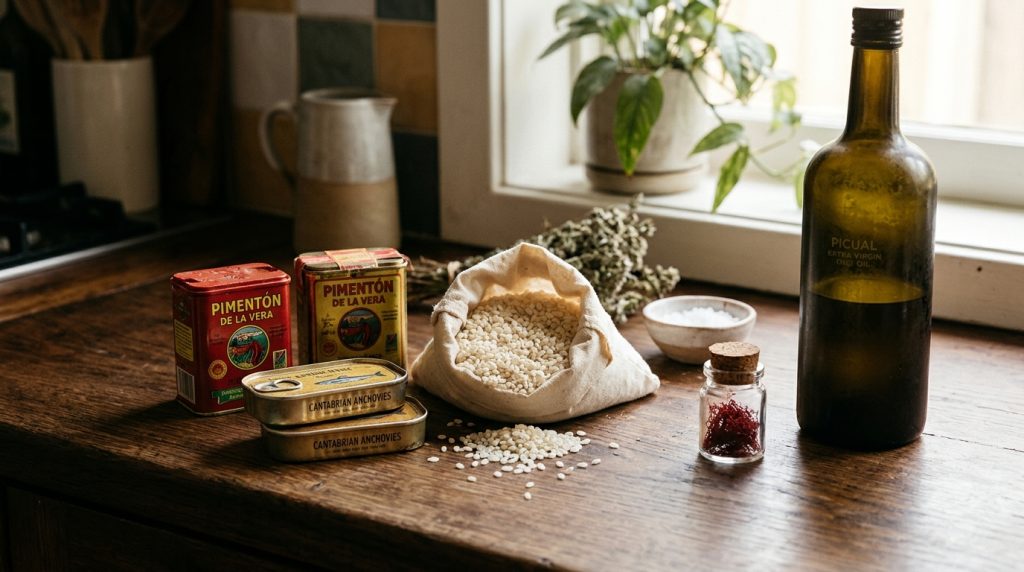
1. Arroz Bomba (The Only Rice for Paella)
If you attempt a paella with Arborio, jasmine, or standard long-grain rice, you are not making paella—you are making savoury porridge.
Bomba is a short-grain, round rice cultivated predominantly in Valencia and the wetlands of the Ebro Delta. Its structural party trick is absorption: Bomba can soak up nearly three times its volume in broth without bursting or turning to starch-glue. That means maximum flavour infusion while each grain remains distinct and slightly al dente.
- What to look for: Look for the D.O. (Denominación de Origen) seal—specifically Arroz de Valencia or Calasparra.
- The Australian reality: You will rarely find real Bomba in Coles or Woolworths. Don’t waste your morning scanning supermarket aisles; pick it up at continental delis or order a 1kg cloth bag online.
2. Pimentón de la Vera (Smoked Paprika)
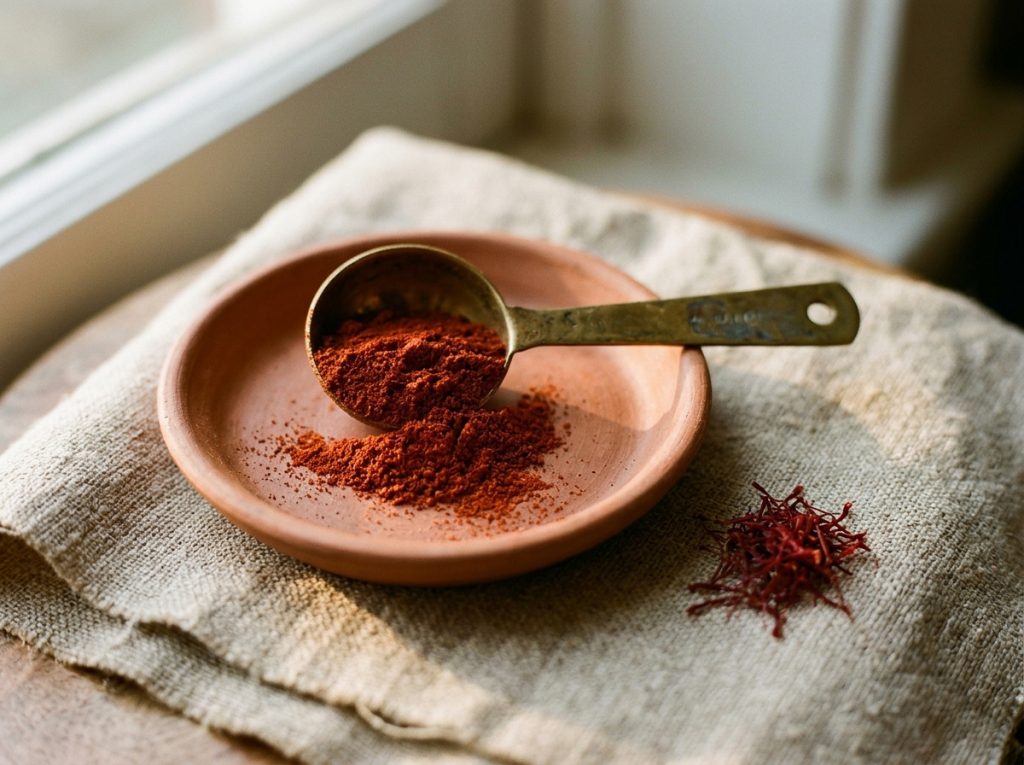
Standard supermarket Hungarian or sweet paprika provides colour and mild sweetness, but it lacks the soul of Spanish cooking.
Genuine Pimentón de la Vera comes from the Extremadura region, where hand-harvested peppers are dried over smouldering holm-oak wood smoke for up to two weeks before stone milling. It comes in three variations: dulce (sweet/mild), agridulce (bittersweet), and picante (hot). If you only buy one, start with dulce.
- What to look for: Look for the vintage-style tin emblazoned with the D.O. seal—brands like La Chinata or Las Hermanas. The tin protects the volatile aromatic oils from oxidising in our dry Australian heat.
- How to use it: Stir it into olive oil at low heat for sofrito, dust it over grilled octopus (pulpo a la gallega), or mix it into roasted potatoes. Never burn it; burnt paprika turns bitter instantly.
3. Extra Virgin Olive Oil (Single-Varietal Picual or Arbequina)
Australia produces world-class olive oil, but the Spanish palate favours specific varietals that bring distinct personalities to the table.
- Picual: Robust, peppery, slightly bitter with notes of green tomato leaf. Its high polyphenol count makes it remarkably heat-stable, making it the everyday workhorse for frying eggs, braising meats, and base sofritos.
- Arbequina: Fruity, buttery, gentle, and aromatic. Keep this in a dark bottle for finishing chilled gazpacho, dipping fresh crusty bread, or drizzling over sliced tomatoes with sea salt.
- Aussie kitchen tip: Don’t be afraid to keep a 5-litre tin of cold-pressed Spanish extra virgin in the cupboard. Quality EVOO is an ingredient, not a cooking spray.
4. Sherry Vinegar (Vinagre de Jerez)
If red wine vinegar is a blunt instrument, Vinagre de Jerez is a precision tool. Produced from Palomino or Pedro Ximénez grapes in the Sherry Triangle of Andalusia, it is aged in American oak casks using the traditional solera fractional blending system.
The result is deep amber complexity, rounded acidity, and woody dried-fruit undertones. A splash of genuine Reserva sherry vinegar instantly rescues a flat lentil stew, cuts through fatty pork belly, and provides the spine for salmorejo.
- What to look for: Bottles labelled Reserva (aged at least two years) or Gran Reserva (aged 10+ years). A 250ml bottle will last months because you only need a teaspoon at a time.
5. Cantabrian Anchovies & Bonito del Norte (Conservas)
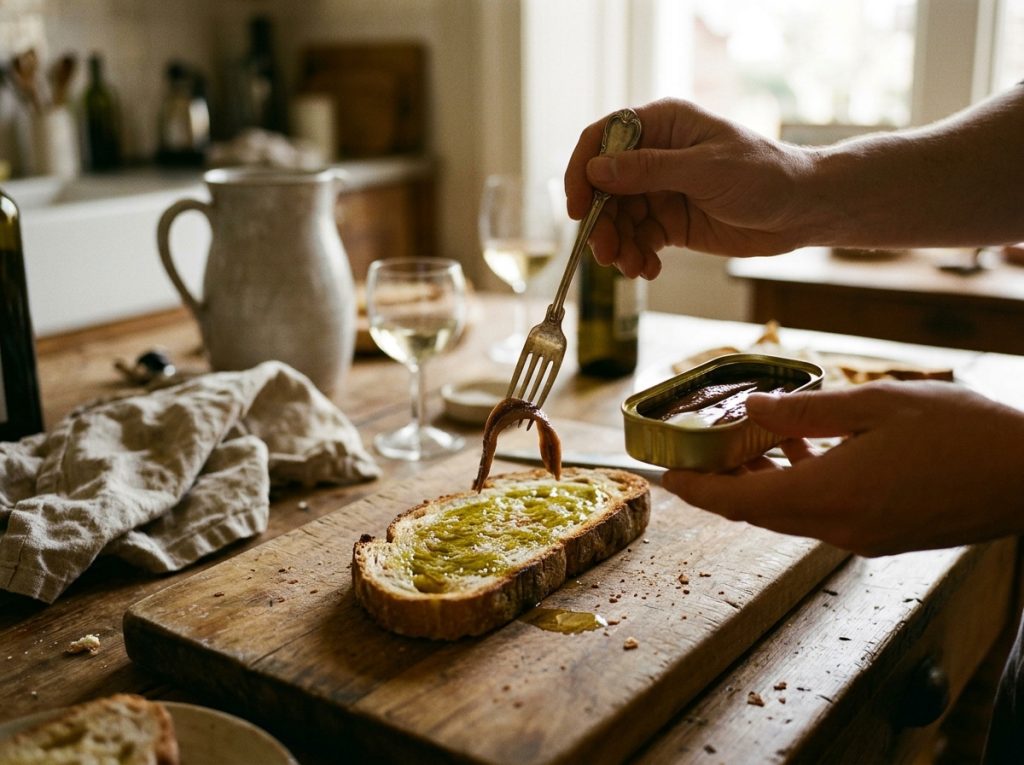
In Spain, tinned seafood (conservas) is not a cheap pantry backup for when you run out of mince; it is a gourmet national obsession, frequently commanding higher prices than fresh fish at tapas bars.
- Cantabrian Anchovies: Sourced from the cold, turbulent waters of the Bay of Biscay, these are hand-filleted, cured in sea salt for months, and packed in pure olive oil. They taste meaty, saline, and buttery, completely devoid of the muddy metallic tang found in budget pizza anchovies.
- Bonito del Norte: White albacore tuna line-caught in northern Spain, poached, and jarred in olive oil. Flake this over boiled potatoes with pickled guindilla peppers, or serve it simply on toasted baguette.
6. Saffron (Azafrán de la Mancha)
Real saffron is the hand-harvested stigmas of the purple Crocus sativus flower. It takes tens of thousands of flowers to yield a single pound, which explains the price tag.
Fake or adulterated saffron (often dried safflower or dyed corn silk) is rampant on discount shelves. Real Spanish saffron does not impart a loud, pungent punch; it gives a quiet, earthy, hay-like perfume and a rich sunset-gold hue to broths, paellas, and escabeches.
- What to look for: Always buy whole red threads (hebras), never ground powder. Look for D.O. Azafrán de la Mancha.
- Preparation: Gently toast a pinch of threads in a dry spoon or small pan for 10 seconds, crush them between your fingers, and steep them in 50ml of warm stock before tipping them into your rice.
7. Jarred Judión / Garbanzos (Pedrosillano Chickpeas & Giant White Beans)
Tinned beans from the local supermarket are fine for soup, but Spanish jarred legumes (alubias and garbanzos) are in an entirely different league.
Spanish jarred pulses are slow-cooked in their own liquor until the skins are feather-light and the interiors turn into pure velvet. Judión de la Granja (giant creamy white butter beans) and Garbanzo Pedrosillano (small, firm chickpeas that hold their shape) can be warmed through with chorizo, garlic, and a spoon of pimentón for a full meal in eight minutes flat.
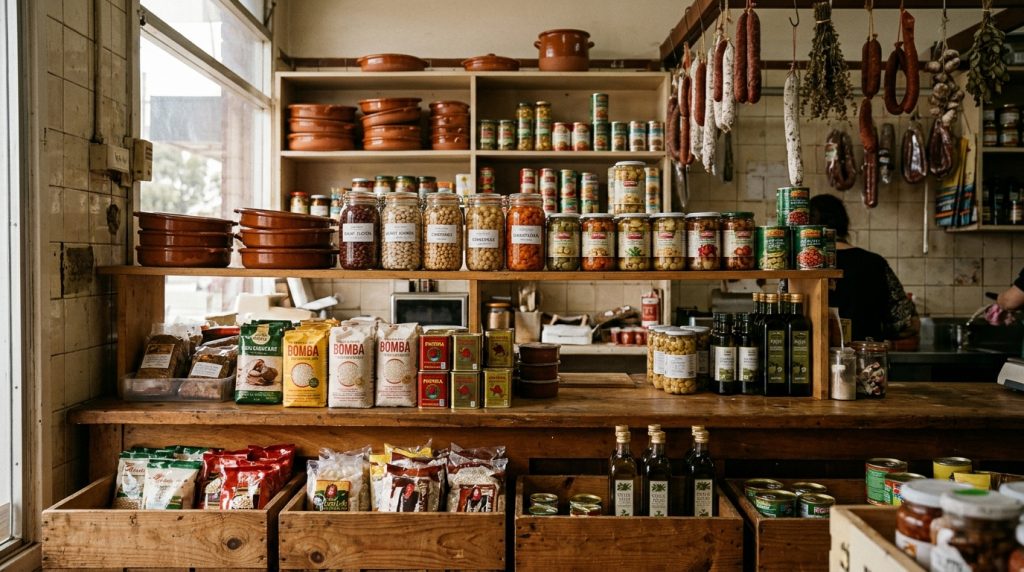
Where to Find Them in Australia
You don’t need an international shipping forwarder to stock your pantry with the real deal.
- Essential Tools & Cookbooks:
- The Cookware: If you’re buying proper Bomba rice, cook it properly. A traditional Valencian Carbon Steel Paella Pan (34cm) heats evenly over Australian stovetops and barbies without scorching the centre.
- The Reference Manual: Claudia Roden’s The Food of Spain is the undisputed bible for turning these seven staples into actual domestic feasts.
- Pantry Foundations: Pick up authentic tins of La Chinata Pimentón de la Vera, cloth sacks of Arroz Bomba D.O. Valencia, and glass vials of Spanish Saffron Threads with local Australian delivery.
- Brick-and-Mortar Continental Grocers: If you prefer browsing shelves in person:
- Melbourne: Head to Casa Iberica (Fitzroy and Alphington).
- Sydney: Visit La Boqueria
- Adelaide & Regional: Check continental delis at the Adelaide Central Market, Ballarat’s local independent providores, or Harris Farm Markets across NSW and QLD.
- Directory Resources: Check our full curated list of Australian Hispanic food importers and grocers in our resources directory.